|
||||||||||||||||
|
The author frankly and transparently narrates his experience of being
handicapped, yet he leaves out so many details for his readers to
speculate and imagine. However, he justifies such an approach with the
fact that what he left out is intertwined with the privacy of others. He stated" I have
found myself in a world governed by the rules of handicapped yet I was
facing this reality with my mental state of mind prior to the accident."
He was on his way to Muscat through which he planned to proceed to Marmul, his work place. After covering almost half of the distance he saw at dawn two huge camels intercept him and within a fraction of a second he found himself slamming his car brake to avoid them. Unfortunately the car skidded and Mohammed was horrified when his car hit one of the camels forcefully. As a result the animal flew in the air to land with its heavy body on the car roof and hit Mohammed on his head, causing injuries and unimaginable disruption in the life of the budding engineer. After the accident he was taken to Ibra Hospital and then Khoula
Hospital where he was diagnosed as having a spinal cord injury. He
accepted his fate with courage and patience. This was the starting point
with agony and pain. From Khoula Hospital he was taken to London. There
he was subjected to an intensive painstaking rehabilitation and a
specialised physiotherapy programme. He advocates that being handicapped does not mean that a person is mentally sick and cannot think and lead a happy life. He stresses the importance of one's attitude towards himself as a determinant of how people would react to him. The handicap imposes a solitary life where he found that his interaction with people decreased but the quality of his social circle became even better. On the occupational sphere he found himself a translator rather than an engineer. Changing his paradigm to manage the new reality was a formidable task but Mohammed has proved it to be a possible mission with discipline, dedication, unshakable determination and a lot of patience. Mohammed remains thankful to all those who stood beside him in his distressed moments. He appreciates the gesture that Petroleum Development Oman took towards him. Among those whom he cannot forget, is Dr Harvey the previous head of the Medical Services who spared no time and efforts to facilitate things for him in his rainy days. This incident seems to unveil so many masks and reveals that there are
so many who have changed colours and drifted away. Although the world
has changed and material values have dominated human relations, there
are still people who passed the test of life and came out with flying
colours. We see this in several places within his autobiography. He approaches his readers through a memory of a young boy named Awad since he was born after the demise of his elder brother. He became literally a replacement for his brother according to the then rituals. Awad grew up with the nomads and enjoyed their characteristics. In snap shots he reflects the essence of the daily life of a nomadic community and describes their customs and rituals. It is clearly evident that their life was simple and that they think in terms of team spirit. One relative of the chief of the village came to visit his father-in-law and brought a radio along with him. Such technology was unheard of. So it became a controversial issue among the inhabitants of the valley until they compromised with it. Innocently playing with his colleagues, the boy was not aware that soon he would leave this place to join his relative in a coastal area that does not resemble his birthplace and was unknown to him. When the moment of departure came, his father rented a camel guide to
help the family transfer to the new destination. The trip was commenced
through the desert where they had to cover sand areas and climb
mountains and reached Sur from the eastern side. The boy was amazed when
he saw the sun rise from the sea. He could not help but wonder why it
rises from the mountain back home. Several thoughts crowded in his head
but it was not the time or the place to satisfy his curiosity. The earlier days in the city were just an ultimate culture shock for the boy. He felt a sense of alienation and did not seem to be able to make a smooth transition accepting the youngsters around him. His accent seemed so difficult for them to comprehend. His attire was strange too. He neither knew how to swim nor to fish. This triggered sarcastic remarks against him. This attitude led the boy to the local market where he gradually became a familiar face and mingled with the elders. He was an eyewitness to so many intellectual and entertaining debates. His curious nature resented routine and therefore he attempted to explore the various aspects of the local market. He made a habit of roaming around the old sales ladies and was fascinated with the surroundings. Their sweets seemed to tempt his appetite so he had an affinity for them. His wandering mind took him outside the market parameter where he saw a group of adults playing a traditional gambling game but what was even more stunning for him was a girl named Shamrook who was playing with them. Such a scene was striking in a conservative society. Later, he discovered that she worked hand in hand with the men selling fish and exchanged vulgar talks with them as well. The parents did not tolerate such deviation from the part of their son therefore, they decided to take him to the Quranic school where the discipline and toughness of the reputed female teacher with her long stick was enough to get him on the right track. To their dismay the boy with his nomadic upbringing could not tolerate the stifling environment of the school. Therefore, he ran away to his grandmother in the valley where he grew up in, without informing his parents. This incident created contradicting views among family members to an extent that some had taken an oath that if something bad happened to the kid the teacher should be responsible. Afterwards the boy was taken to the city's regular school and along with his close friend, Mohammed formed a cozy twosome. They always sat together, went and came together. When Mohammed was late his friend would reserve his seat for him. He always put his walking stick there to signify that the seat was reserved. The author takes us on a panoramic trip in which he describes the various places of the city. He also elaborates on the tribal composition of the place and its rituals. He touches on the Indian community, and explains their role in commercial activities. He goes further and highlights the strong ties that have existed between Sur as one of the important seafaring and commercial centres and the other coastal areas such as India, Africa, Yemen and the rest of the Gulf countries. The author mixes his language with some colloquial words but does not
fail to provide an explanation for them. This seems to add flavour to
the context and the readers cannot help but visit the past with their
imagination and appreciate the environment. This book remains to be
translated and put before non-Arabic speaking readers to appreciate this
realistic story and comprehend the lessons in it.
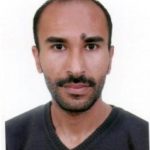
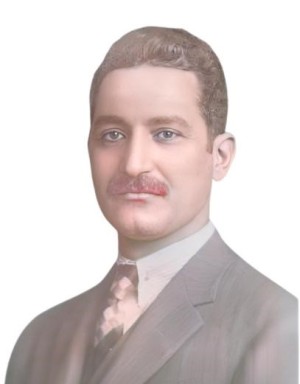
الاسم: محمد مبارك خميس عيد العريمي هناك في وادي المر، باشرت قراءة القرآن الكريم في الهواء الطلق تحت ظل شجرة، وتدربت على ركوب الجمال، وتصويب البندقية والضغط على الزناد، وتعلمت غناء التغرود والطارق، وسهرت على ضوء القمر، ونمت تحت فوانيس النجوم، وخرجت مع رعاة الإبل نجوب الصحراء أياما بحثا عن أجمة حالفها الحظ أكثر من غيرها فارتوت من زخة مطر لم تدم طويلا. ومن هنا
انتقلت إلى مدينة صور الساحلية حيث تلتقي سفن الصحراء بسفن الماء، وحيث
السفر والترحال شكل ملامح سكانها منذ القدم: رجالها ركبوا الأمواج وسفنهم
عبرت البحار وألقت مراسيها في مراف كثيرة.. حملت على ظهرها مهاجرين ورجال
بعثات تبشيرية، ونقلت أيضا مرتزقة وتجار عبيد ومهربي أسلحة ورجال عصابات
وثورا. سافر على متنها ملوك وأمراء.. باحثون وعلماء، وآخرون غيرهم كثر.
السيرة الأدبية
صدر لي : Authors AtoZ Home Bookstore Top © Arab World Books |
|||||||||||||||