JORDAN |
|
|||||||||||||||
|
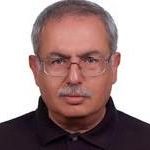
Tal was born in 1945, Irbid, where he completed his secondary education. At that time there was no university in Jordan, so he was first sent to Egypt, to Al Azhar University to study medicine. He later returned to Jordan and then to Lebanon, [and finally] left to London, where he wanted to study mathematics, but news came from his family in Irbid to study Petroleum Engineering, which he acquired with an honors degree from London University. Now an established novelist in Britain, Tal is etching a legacy of Arab culture and social tales that even Arabs could be unaware of. In 12 August 1999, the Jordanian Newspaper The Star published an interesting interview where The Star's Marwan Asmar and Rasheed Al Roussan met with Tal, excerpts follow: An Arab living in the European Diaspora, is this a fair description of you? No. I don't see myself as a refugee or someone detached from his homeland. I am not detached from any part of the Levant. I am with it. I follow up the social evolution of the area. Their problems, their aspirations, their do's and don'ts, their overloaded agenda of success, freedom and liberation are all close to my heart. Somebody asked me once what do I see in the window of my study in England? I see the Golan Heights, the plains of Palestine and the agonies of the Iraqi children. However, every time I visit Jordan I see commercial development, construction of hotels, villas and new roads. Yet people seem to be going further back in a reactionary way. They are basically searching for identity in a world ruled by American and European fashion. Our people seem to know who they are and where they are and where they come from in this complex invasion of "isms" that thinkers seem to be banding around without much concern for ordinary people. Politics never interests me. I am more interested in how people live their daily lives; their happiness, sadness, what actually makes them tick. We can characterize your books, "On the Walls of My Being" and "Sheikh of Lovers", in terms of being geared to the Orient, and specifically to Jordan. Is this a good thing, and aren't you in danger of slicing the market? In other words, who is your target audience? I write for anybody who wants to read. I want people in the region to read my works to get the sense of who they are. But your audience is mainly the English speaking market, right? This hasn't always been the case. I started writing in Arabic. I wrote four novels in the Arabic language. And I tried to publish one in Jordan, but I didn't have any body to push my case. I was later told that if my work was published in English, most people would have taken notice of it. So it's not because you like to express your ideas in English, it is only because it is a better way to reach people, right? Yes, it is just a medium. I was even shocked to find out that my English turned out to be literature! In "Sheikh of Lovers", you adopted a very classical style of writing, which seems to be far from today's rapid pace, why? That's the only way I can write. I have no training and I really chose no style at all. But I have been writing since my early days: Short stories and scribblings. You are becoming an established author, what made you take up such a hectic career? Well, the reason I chose writing was because of my health. I suffer from Chronic Asthma, so doctors told me not to make any physical effort that can worsen my health. I thought of acting at the beginning as a career, but I took up writing at the end. What about the process of writing? All my novels so far are based on true
characters. And all my works, except the recent novel I am working on, are inspired from
real events that occurred in Irbid. You created for yourself a niche in British society, can you see yourself as a bridge, if you like, between Arab and western culture? No I don't. You seem to tackle religion and women in your novels, how do you see society today in relation to these issues? When it comes to women, our society is a
society of herdsmen, where men are the shepherds and women are the cattle. All that men
care for is what women wear, who is the father of this woman, how on earth is she allowed
to leave the house all dressed up, etc. How do you see the literary movement in the Arab world, as a Jordanian, who is now looking from the outside onto his fellow country and region? First, Arabic literature was and is imitative. In recent years, there was a movement in 1967 to create a core of Arab literary figures, but unfortunately, the limitation put upon their output by local forces (religious and political) reduced their efforts to create such an independent and locally based movement. Tell us about your next novel I am working on a new novel called
"Everyday is the Last Day", in addition to a long poem titled "Of Longing
and Belonging". Both are works of my own imagination. The novel is set on the Golan
Heights and it follows the life of the main character, who is also the narrator of the
story. The hero talks about his life during a time of change, when the Ottoman Empire was
collapsing, followed by the rise of French and British rule in the region. He meets an
outcast, becomes very obsessed with her and they secretly fall in love. Once, he hears
pupils talking about her bare flesh and he decides to buy her cloths to cover her parts. Do you often talk about women in your novels? Yes, because they are half of the society. And talking about women in our society is taboo. I like to talk about taboos: Sadism, homosexuals, bisexuals, they are all human relations that must be tackled. I will be publishing a novel called "The Burning Peacock", which deals with homosexuality in Irbid. Are you being given the chance you deserve as a writer in Britain? To be fair, yes. There is no restriction on what I say, and there are many publishers who would take you on. In English: On the Walls of My Being Karnak House1986 Excerpts from a review made by the author Set at the closing
decades of the cruel and dark tyrannical Ottoman rule, it is based upon the true story of
Ali and Mashiekh, my grandparents, who defied their elders and eloped in 1900. The novel
follows how mistrust and rivalry between the shiekhs of the two clans draws their clansmen
into fatal feuding. Sheikh of Lovers Minerva Press October 1997 This book is set in the
year 1956 in the town of Irbid on the East Bank of the River Jordan. The stage for the
work is the Suez War and the background is the catastrophe of 1948 which Authors AtoZ Home Bookstore Top © 1998 -2000 Arab World Books |