By Ilan Pappe
Prominent Israeli academic and the Director of International Relations Division, Haifa University


Over a year has passed now, since the Israeli army invaded the refugee camp in Jenin, destroyed its houses, killed many of its inhabitants and committed one of the worst war crimes in this present Intifada, Intifada al-Aqsa. With a successful campaign of distortion and manipulation of evidence, the Israeli foreign ministry, with the help of the United States, succeeded in hiding from the world the horrors of Jenin, and even worse, in intimidating anyone daring to tell the truth about what had happened there.
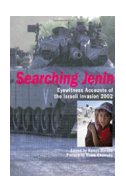
This is the great significance and enormous importance of this book. "Searching Jenin" is the first systematic account, through eyewitness reports, on the events in April 2002. Two other books appeared in Arabic, but this is the first one in English. It puts the events in context and it highlights the true nature of the crime, while not falling into the pitfall laid by the Israelis who succeeded in drawing the UN inquiry commission into supposedly academic discussion of how to describe a massacre. As comes out vividly from this book, Jenin was not just a massacre; it was an inhuman act of unimaginable barbarism.
Noam Chomsky, in his introduction to the book, puts it in the context of crimes sponsored by America and he is someone who recorded meticulously these crimes in the past. Ramzy Baroud, in his preface, notes rightly that the book will not answer the question of how many people were killed, nor will it cover every aspect of the crime. But it does convey the message, as one of the witnesses put it that, `what I have seen are crimes; sometimes greater than an earthquake'. And this is not just an impression, as this book makes it all too clear: every aspect of the Israeli actions in Jenin can easily be identified as war crimes, according to the Hague convention.
Testimonies like the ones presented do not only help to shed light on many of the chapters hidden by the Israeli screening and news' manipulation, it also brings forcefully the emotions, sounds and smells of the catastrophe. The pain is still there in those telling the stories. The book conveys the lingering agony through the italic interventions of the editors. Through them, we learn that while witnesses recall the horror of April 2002, like Hussein Hammad, they have to stop several times � sometimes to repose and occasionally to weep, before able to resume, like Hammad does, their stories.
Sometimes the testimonies, at first glance, seem not to tell enough � as if the survivors wish to repress the horror rather then tell it in full. But the economy of words reveals quite often, even more about what had happened. Rafidia al-Jamal is very laconic in a way, in her testimony, but the full extent of the atrocity comes out in a very short sentence she utters. This is the case when she describes how she prevented desperately her husband - who had saved her life a moment earlier � from searching after his sister. "Don't go,� I told him, "She is Dead". And then she reports dryly: `my children have nightmares'.
Other witnesses, especially mothers, feel the need to expand when it comes to their children's nightmares. Each with her own way of coping with the persisting torment of their children. Mothers all over the West Bank, and not only in Jenin a year after the massacre, spent sleepless nights with terrified children who witnessed the brutality at first hand. In Jenin, Farid and Ali Hawashin are such typical victims of continued nightmares of fear, that according to their mother, haunt them even during daylight. For them it is mainly the noise the disturbs their peace of mind: that of the loudspeaker that arrived near midnight at their home, that of the brutal burst into the house, that of the men pleading with the soldiers before being thrown out to the street, and then, worst of all, that of shots, the groaning of wounded and the silence of the dead. Noise and death repeat themselves in the memories of everyone in this book.
With these memories of sound and vision, the search for Jenin continues throughout this powerful document. It is a search for truth, but for other things as well. It is a search for loved ones unaccounted for, long after the massacre ended, and then there is a search for a remedy to the pain of the nightmare, and these searches were far more important than the question of how many exactly died in Jenin. Even without this question being answered, there is a sense that this is the most authoritative report we will ever get.
Each reader will take something different from this book. For me as an Israeli, I find the description of the soldiers' conduct the most disturbing and most convincing part of the evidence. It is a story of the dehumanization that raged in Jenin. This is so well epitomized in the chronicles of Nidal Abu al-Hayjah as reported by Ihab Ayadi. After Nidal was wounded and lay crying for help, anyone who tried to come to his rescue was shot by Israeli snipers. He bled to death as so many others. Technically, he was not massacred, he was tortured to death. The deadly precision of the snipers as a means of deterring rescue operations is being reported in other testimonies in this book, such as that of Taha Zbyde, who was killed eventually by a sniper. This mode of action was and still is enacted wherever there is an Israeli operation in the occupied territories. It is part of the vicious repertoire of the inhuman occupation � the daily physical harassment and mental abuse at checkpoints, the prevention from pregnant mothers or the wounded to get to hospitals, the starvation and the confiscation of water. No wonder some Israelis felt this brings back memories from the darker days of the Second World War. I remembered Anna Frank's diary when I read Um Sirri's horrific recollection of how women tried to swallow a cough that irritated the Israeli soldiers standing above them, pointing their loaded guns at them.
But there are ways of opposing the inhumanity of the occupier. This is why mothers in this collection talk proudly of babies born after the massacre. The expectant young Sana al-Sani decided to call her baby, if it is a girl, `Zuhur', which means `flowers'. This wish is expressed in the book after Sana recalls one of the most horrid memories brought in this collection. Her husband was slaughtered on his house's doorsteps, and yet it is not revenge or retribution that guides Sana, but a dream of having a different kind of life.
But can flowers such as Sana's daughter flourish once more in the `camp of martyrs' as the survivors called what was once their home? The flowers will have to overcome the desolation and bareness. Most of the houses were destroyed during the invasion. The Israeli army, after it expelled the resistance forces, located its artillery near the mosque and shelled the camp indiscriminately. Moreover, for blooming to take place where death once reigned, the smell would have to evaporate first. An American volunteer, Jennifer Lowenstein, until today can not sleep as the odor of death still troubles her nights and the nights of those few westerners, who gave evidence in this book, and who were fortunate enough not to be killed. They helped to tell the world the truth of what had happened. One of them is Tevor Baumgartner, who is the one who revealed the existence of mass graves, an allegation that was refuted early on in the Israeli denial, a denial that was so eagerly accepted by the United States.
This is a must, albeit a very difficult, reading. The campaign against the continued dehumanization of the Palestinians in the occupied territories cannot be based on slogans and general accusations. There is a need for indictments such as one provided here, which will hopefully very soon arise enough public indignation so as to vie governments around the world to take acting to save the Palestinian people before it is too late.