In the depth of this Oriental Stage stands a prodigious cultural repertoire whose individual items evoke a fabu-lously rich world: the Sphinx, Cleopatra, Eden, Troy, Sodom and Gomorrah, Astarte, Isis and Osiris, Sheba, Babylon, the Ginni, the Magi, Nineveh, Prester John, Mahomet, and dozens more; settings, in some cases names only, half-imagined, half-known; monsters, devils, heroes; terrors, pleasures, desires (1).
In his introduction to James Morier's The Adventures of Hajji Baba of Ispahan, C. W. Stewart writes
It seems more natural to speak of "the author of Hajji Baba" than of "James Justanian Morier", for the book is familiar, at least by name, to many people who are ignorant of the personality of its writer. His contempor-aries, however, regarded him in different light, and a reviewer could describe him, without being suspected of exaggeration, as 'among the most skillful diplomatists, the most instructive of our travelers, and the most amusing of our novelists'. This summary of Morier's talents, since it enumerates successive phases of his career, and lays stress on the attributes that combined for the triumph of Hajji Baba, provides the outline for a sketch of his achievements (2).
James Justinian Morier (1780-1849) was the son of Justinian Morier, the Consul-General of the Levant Company at Const-antinople (3). Several members of Morier's family had connections -- in one way or another -- with the East. James Morier, a son of a diplomat, entered the world of diplomacy in 1807; he spent part of his diplomatic career in Persia. During that time he wrote three long literary works. They are: First is The Adventures of Hajji Baba of Ispahan (1824)(4), [Afterwards, Hajji Baba. Then he published The Adventures of Hajji Baba in England (1828) and Zohrab the Hostage (1832). C. W. Stewart mentions that "Zohrab the Hostage, a Persian tale, but even this book, though popular in its day, has failed to survive"(5). At the same time, it remains that The Adventures of Hajji Baba of Ispahan is the work by which James Morier is still remembered (6).
In this paper, I attempt to read Hajji Baba in terms of two major broad lines. First is the political and diplomatic background of Morier's family in London and Constantinople and second is his mature experience as a diplomat and the political conditions during his stay in Tehran. Thus my app-roach comes from cultural and political perspectives.
Morier's social and political background is marked by his fascination with the culture of the East (7) -- a fascination that included his travel experience and his reading of Eastern literary works such as Antoine Galland's French translation of the One Thousand and One Nights under the Western made title, The Arabian Nights (1704) and perhaps other Arabic and Persian poetry and literature(8). A great number of translations from Arabic and Persian were introduced into the English literature(9). Also there were important books of travel literature that could have influenced James Morier’s mentality and literary production. Those translations encouraged other writings (10), and generated other literature related to the East and its cultural heritage (11). Needless to say that the Romantics produced a huge bulk of literature related to the East, and the Orient is considered as “a major component of European Romanticism”(12). Though it is a literary work with little reputation those days, Morier's Hajji Baba represents a mentality of some Romantic writers and politicians.
It was wormly welcomed by writers and scholars in the nineteenth-century England. Curzon describes this piece of literature in the following words "Morier's Hajji Baba represents an account of the 'unchanging characteristics of a singularly unchanging people'" (13). And C. W. Stewart writes
When Hajji Baba appeared in 1824, good judges of fiction, among them Sir Walter Scott, immediately recognized it as a fine piece of picaresque literature, worthy to be compared with Gil Blas, the masterpiece that had suggested to Morier the mould into which to pour his knowledge of the East (14).
In the middle of this flux of writing, Morier was drawn to what looked to him like a unique life of the East. His view of the East helped him go with the fashion of his time as it was the time of the West's keen interest in the "exotic life" of the East. Exoticism, in this context, is meant to express the uniqueness of life due to its non-Western flavor and cultural milieu. Therefore, it is no wonder that Morier's Hajji Baba has been described as "the perennially delightful novel of Persian life" (15). In this context, I would like to quote Edward Said as he says:
Whenever the Oriental motif for the English writer was not principally a stylistic matter (as in FitzGerald's Rubáiyát or in Morier's Adventures of Hajji Baba of Ispahan), it forced him to confront a set of imposing resistances to the individual fantasy (16).
Edward Said's comment on the English writers came to be true in the case of Morier. In Hajji Baba, Morier shows a double vision. The question of his interest in the East does not stop at the border of fascination and entertainment. His fascination with the culture of the East is more than a love of something that is meant to be naturally beautiful and socially entertaining and enjoyable: it is an admiration of the atmos-phere and life of the glamorous East in general; he sees the East as a land of bounteous gifts of Nature -- serene waters, unclouded sky, and gifted poets. Its a land of luxuriant economy where Britain can take cheap raw material and a good market place for selling its production. In addition, Morier sees it as a land of enchantment, sorcery, divination, black-magic, melancholy, mysticism, exorcism, supernatural-ism, demons, ghouls and effrits, and "wicked angels". There-fore, it is evident that Morier views the East in the Romantic framework. The interests of the Romantics in the East have been described by Nigel Leask as
Increasing concern about the moral probity of orientalist literature by the turn of the eighteenth century seemed to have had its economic corollary in the transformation of India and parts of the Eastfrom sources of tribute and producers of luxury goods to real or potential subject states, sources of raw material and consumer markets for home manufactures upon whom Britain was becom-ing increasingly economically dependent (17).
Meanwhile, people of the East -- in Morier's eyes -- are infidels, corrupt, inquisitive, loquacious, treacherous and sometimes naives and idiots. Hajji Baba reflects the double vision of the Others or the Colonized. Such a vision is a Romantic one; it looks identical to Thomas Moore’s vision to the Nature of the East on the one hand and its people on the other in his poem Lalla Rookh (1818). Moreover, Morier sees that woman in Islam occupies a marginal position, or even worse, as she exists only to gratify man's physical needs. One of the unpleasant and offensive descriptions, by the Romantics, of the East and its culture came from Robert Southy in the preface to his translation of some Arabic and Persian poetry. He described the Persian poetry, in partic-ular, as “high seasoned garbage of barbarians” (18).
Morier's learning and knowledge of the East goes back to the neo-Classical scholars who degraded, under-valued, and derogated the East and its cultural heritage. Most of those eighteenth century scholars were Biblical scholars who loathed or antagonized the East. Of the neo-Classical outlook and antagonism to the East, certain hints are really indicative: John Lettice, William Beckford's tutor, had forc-ed him at the age of thirteen to burn a 'splendid heap of oriental drawings, etc.’(19). Gibbon's tutors at Magdalin College frustrated him and dissuaded him from learning Arabic; Shaftesbury's dogmatism prevented him from read-ing the Arabian Nights for the naive reason that it was originated in the country of the infidels; (20) Alexander Pope wrote to Lady Mary Wortly Montagu that the East is the land of Jealousy, where the unhappy [w]omen converse with [e]unuchs (21). Richard Burton made a pilgrimage to Mecca in disguise and wrote about it (22). In his introductory epistle to Morier's Hajji Baba, Peregrine Persic mentions Dr. Fundg-ruben, Chaplain to the Swedish Embassy at the Ottoman Porte, objection to Monsieur de Bonneval who converted from Cristianity to Islam and rose to high rank in the Turkish government, and also mentioned in initials Messrs. C---- and B-----, in more modern times. (The former a Topchi Bashi, or general of artillery, the latter an attendant upon the Captain Pasha) (23).
In a fifth place, Samuel Johnson portrays the young women of Cairo as ignorant; these women's days and nights are alike, and in the Arab seraglio, exquisitely beautiful women run from room to room as a bird hops from wire to wire in his cage (24).
Morier stands in between the eighteenth century neo-Classicists and the nineteenth century Romantic Orientalists learning from them. The early images of the East are neo-Classicist, then he develops a Romantic theory based on, perhaps, Byron, Scott, and Moore. Morier’s literary produc-tion is a qualititative and a quantitative, that enriches the poli-tical thought of the up-coming generations of scholars and writers, and deepens the stereotypes of the East in the West-ern scholarship and academy.
Though Morier is a minor Romantic writer, his literary production represents the mutual relationship between Orientalism as a stream of European thought, and literary Romanticism as an intellectual stream common in the early decades of the nineteenth century Europe. Such a relationship has been created, enhanced, then confirmed by the extran-eous efforts of the social philosophers, political thinkers, and literary scholars of the time. The work of such writers and politicians covered with full awareness, such provinces of knowledge as philosophy, history, economics, politics, philo-logy, literature, sociology, and Egyptology. In the end, the outcome is a kind of imperialist oppression against the East.
Morier's career as a diplomat has flourished and been completed by his literary writing; these two factors of diplo-macy and writing integrated in one activity aiming at one end -- Colonialism. In connection with the subject of Colonialism C.W. Stewart writes
At the beginning of the nineteenth-century, Persia arou-sed much interest among European powers; in France Napoleon dreamed of invading India with the Shah's assistance, Russia was aggressive on the north Persian frontier west of the Caspian, and after the alliance with France, joined actively the plan of attacking India; while Britain hoped, by a treaty with Persia to restrain Afghanistan from disturbing north India and to frustrate the Franco-Russian schemes. Both Britain and France sent representatives to compete for the Shah’s favor, and the vacillations of Persian foreign policy, in corres-pondence with events in Europe, kept the rival ambassa-dors busily employed (25).
Western literature is the image mirror upon which European political affairs reflects. Thus, on the long run, such a literary-politico bond and its consequences have created ster-eotypes that have become dominant in the European scho-larship, and clichés that have been copied almost every-where in the West whenever the subject is related to the Eastern culture and people: its generalization has become a dominant characteristic of the Western writing about the East. As la mode of the Romantics and following a well established tradition in Western literature, the people of the East are described as infidels, barbarians, and moors; savage, uncivilized, and inhumane nations. These Oriental clichés serve as key-words to another list of clichés. In the end, the outcome of these packs of clichés reveal but historical prejud-ices that have been accumulating for centuries. This general-ization about the Easterners whether Arabs, Persians, or Turks, is very clear in Hajji Baba. Morier's contribution to the Western Colonialist thought stretch back to the eighteenth century and forward to the Victorian era and after; accumul-ation of evidence in Hajji Baba reveals Morier's undeclared political intentions, and the message is that the East is charac-terized by good fortune, and it prospers with luxurious life, but it is morally weak. Morier has learnt much from the Western scholarship. About such a scholarship, Edward Said writes
The choice of 'Oriental' was canonical; it had been employed by Chaucer and Mandeville, by Shakespeare, Dryden, Pope, and Byron. It designated Asia or the East, geographically, morally, culturally (26).
Morier's Hajji Baba presents stories built upon political theory enhanced by travel experience, and made in imitation of the style of Galland's version of the Arabian Nights (1707-14)(27) and also he attempts to to write a connected narrative "upon the plan of that excellent picture of European life, [The Adventures of] Gil Blass [of Santilline] of Le Sage" (my italics)(28) On the source of Hajji Baba of Ispahan, C. W. Stewart writes
Hajji Baba and its sequel completed the history of the rascally son of the Ispahan barber, so far as Morier was concerned, but a further piece of information concern-ing Hajji is supplied by Sir P. M. Skyes, who, in The Glory of the Shia World, a record of Persian pilgrim-age, presents as the narrator Nusrullah Khan, the grand-son of Hajji Abul Hasan Khan, the original of Hajji Baba (29).
Elsewhere, in glorification of Morier and praise of Hajji Baba, C. W. Stewart writes
Morier was one of a brilliant series of travelers who in the first half of the last century [19th century] produced familiar studies of Eastern lands. Hajji Baba stands in a class with Warburton's The Crescent and the Cross, Lane's Modern Egyptians, Curzon's Monasteries of the Levant, and Kinglake's Eothen (30).
Morier's misrepresentation of the culture of the East supports a purely political theory in service of a militarily staunch and economically solid European society. It is obv-ious that exaggerated characterization of what Morier introd-uces to the Western reader is an example of Romantic Orien-talism. Some of these images of the East are meant to be presented with contempt and derogation. For example, a Jew was hanged and highly humiliated by the Muslim authority, and a Greek was insulted and oppressed, as
His execution had taken place purposely before the door of a wealthy Greek, and the body was ordered to remain there [for] three days before it was permitted to be carried away for interment. The expectation that the Greek would be induced to pay down a handsome sum, in order that this nuisance might be removed from his door, and save him from the ill luck which such an object is generally supposed to bring, made the officer entrusted with the execution prefer this spot to every other (27I).
This paragraph is a reference to the war between Greece as a representative of Europe, and Turkey as a repre-sentative of the East. Such a war had extremely annoyed and exasperated the central powers of Europe; these powers -- with various interests -- formed what was known as the Holly Alliance in which
Russia, for her own ends, and from traditional sympa-thy, was the champion of the Eastern Christians. Fran-ce, partly from religious and cultural inclination, inclined the same way ... (31).
The war between Turkey and Greece also infuriated the English Romantic writers, thus their stand as regards this war lucidly appeared in their literary production, especially in the poetry of Byron.
In Hajji Baba the images of the cruel death of the jew and the inhumane punishment which he received after his death, portrayed by Morier, are ugly enough to make flesh creep. It is clear that this portrayal presents ideas identical to those of the French Romantic author and statesman Francois-Rene de Chateaubriand (1768-1848) as he, in his Oeuvres, writes about the Easterners that they “Of liberty, they know nothing; of propriety, they have none: force is their God”(32). Such an image assures the Western reader not to take the East seriously, and to consider its culture as something ridiculous to scoff at; the West remains to view the East with contempt in a framework of a Western made Eastern cultural stereotypes. These fabricated and imaginative clichés and anecdotes about the East are common, varied, and wide-spread in Europe.
Morier is one of the literary disciples of William Beckford as he learns from Beckford as well as from the other Romantics like Byron, Scott, and Moore, how to "see" the East.
Like Beckford and Byron, Morier enjoyed travell-ing and reading travel literature especially when the subject matter and material were related to the East, and like Beckford and Byron, Morier derogates the cultural heritage of the East by using many tools available to him. For instance, women in the East are made to look like slaves kept in the Sultan's seraglio or in the harem for the purpose of cooking food, preparing meals, and cleaning (382), and to offer endless sexual pleasures for the Sultan or Emir; though the Eastern woman is obliged to devote herself to these purposes, she is still inhumanely treated; she is next to noth-ing at home; she is a worthless object. “Women by you Mussulmans, I know [,] are treated as mere accessories to pleasure”(215). Morier, in this context, displays racial ideas came out of some school of thought as did Beckford (1760-1844), and Chateaubriand (1768-1848) where the image of the East was cohesively adhered to the freedom of licentious sex. On such derogatory ideas, Edward Said writes
Virtually no European who wrote on or traveled to the Orient in the period after 1800 exempted himself or her-self from this quest (licentious sex): Flaubert, Nerval, 'Dirty Dick' Burton, and Lane only the most notable (33).
Also, Arab woman's perfumes, "the perfumes of Arabia", musk, and nudity, do not help her when the time comes, because her death might bring about more pleasure to the wealthy Arab master than the pleasures of her sexual intercourse. In contradiction to this behavior, harem is made to look like the right place for Muslim man to retire and seek rest (404); such an image smears the picture of the Arab man. Meanwhile, Zeenab was murdered in the harem's corner when she was no longer desired (248). This image brings to my mind Galland's sexism in the Arabian Nights as it represents an instigator to Morier; Galland himself learnt about the East from other earlier travelers. Jean Chardin writes
He had met Chardin, whose writings on Persia were instrumental in the forging of the eighteenth century's views of that part of the world ... Chardin emphasized the severity prevalent in the seraglio, enumerated the restrictions against women, provided examples of the capricious punishments that they were summed up such strains. In one of these, Chardin recounts that king 'Abbas, much taken with the concubine is asked by her to refrain from sex because she is indisposed. Sus-picious of her excuse, he has the matter investigated, and finding her to be free from her 'incommodite de femme', he has her burnt alive (34)
Then came Morier's second experience; he learnt from Galland's experience. Out of these two situations came the story of the murder of Zeenab. But these stories of atrocities against women in the East are not uncommon in the Western scholarship. Kabbani relates the story of a Turkish Sultan who falls in love with a slave girl, so that he abandons all matters of state to lie in her embraces. Rebuked by his ministers and officers, who press him to attend to his army which is about to engage in battle, he is only emerged at their meddling. One evening, he bids his lover dress in her most revealing silks and attend to him in a banquet. He embraces her before his courtier, then abruptly draws his sword and cuts off her head. Another version has him bid his ministers into his bedchamber, where he lifts the bed-clothes to reveal to them the naked charms of his mistress. This done, he stabs her to death and marches off to war (35).
From these repelling anecdotes, one realizes how references to the East are imbued with deep fascination as they systematically keep portraying it in ugly images full of cruelty, ruthlessness, violence, and lasciviousness. In relation to such a context, Kabbani writes
The violence of the East was often linked in Galland's entries with sexuality. This was a common trope of European travel writing: the all invasive seraglio with its crimes of passion was never far from the traveler’s mind (36).
In another reference to the downtrodden Eastern woman in Hajji Baba Dr. Ahmak makes "a present of his Curdish slave to his Majesty" (175) so as to remain in favor of his majesty the king. In short, the Eastern woman is made to be seen, by all means, as a dirt cheap "commodity". Moreover, one sees Hajji Baba himself in a mission where he receives orders to
Buy women slaves for the Shah, to see them instructed in dancing, music, and embroidery, and to purchase spangled stiks [sic] and other luxuries for the royal harem (419).
These negative images of Muslim man and woman are wide-spread and common in the Romantic literature. For example, Byron's Eastern woman is locked up in the seraglio and kept in the harem to be used for giving the wealthy Arab man all means of sexual satisfaction and at the same time, she covets white men for the sake of better sex; she is there to gratify the sexual desire of the rulers (representatives of the Muslim Caliphate) who are driven by lust, and the merchants and tradesmen (a social class close to the Muslim Caliph), whereas the rest of the people are oppressed in slavery and poverty; they, along with whatever tradesmen can bring in for achieving a financial profit. This image reflects the irony that while the Arab woman is enslaved by Arab and Muslim man, she tries to enslave Don Juan. The two images together suggest the humiliation of woman in the East (37). Elsewhere, in Eastern Tales Byron portrays the Arab woman negatively as she lives in violent circumstances and dies by a crime committed against her: in The Corsair, Gulnare the Arab woman was under bad circumstances that led her to kill her master the wealthy cold-blooded Arab tyrant Syed; in The Giaour, Hassan, an Arab man, murders his beloved Arab woman Leila because she betrayed him to someone else; and in The Brid of Abydos, Giaffir [Jaafar] murders Zulieka because she pays attention to Selim the slave; and in Lara, Kaled [Khaled] was made a name of a female and was made not to shy from physical violence (38).
Elsewhere in the English Romantic literature, and earlier to Morier's Hajji Baba, Coleridge's Osorio (1790) depicts Muslims as a people of low rank; they live to serve the Others.
The lower class Muslims who make the happiness of Albert and Maria possible, while treated sympatheti-cally, remain throughout on the margin of the text, entering the action only to further the aims and help construct the value of other -- i.e., white character (39).
Also, throughout Osorio, "Alhadra is associated with polit-ical conspiracy and violence"(40). Moreover, Coleridge depicts Arabs as "Moors", Moresc[s]", "rebel[s]", "vile[s]", and "fiend[s]", and the Arab woman Alhadra is "crazy moorish maid", "a Moorish sorcerer", "an ungrateful woman"(41), whose crime was, she said "solely my complexion" (42).
From this variety of examples, it sounds clear that the negative images of the East in Morier's Hajji Baba do not come out of vacuum; Morier simply reconstructs ideas that have been prevalent in the European scholarship. In addition to reconstructing these images, Hajji Baba duplicates ideas and images of other Romantic writers particularly those of Byron, and like Byron's political poetry, Morier created a political novel in which his imitation of Byron resulted in a new renewed image of Muslims (Arabs, Persians, and Turks) as masters of slave-trade; slaves are made to be bought in Ethiopia and sold in Mecca where exists Kaaba the holiest Muslim Shrine, and where Islam was originally revealed to prophet Mohammed. Moreover, slave-traders are made to use the time of The Hajj [Muslim Pilgrimage to Mecca] for making prosperous business of slavery. On the other hand, it is an irony that the last name of Hajji Baba is taken from Arabic folklore while his first name is taken from Muslim religion; it is a pronoun of someone who performed the Muslim ritual of The Hajj or the pilgrimage to Mecca. These renewed images of slavery undervalue and show disrespect to the Eastern woman. They also derogate the Eastern man.
Moreover, they destroy the image of Islam as a religion. This situation affirms that it is difficult to read the Western view of the Eastern woman without passing through references related to her eroticism, mystique, lasciviousness, nudity, and sexual profligacy. Morier's imaginative anecdote of the "pretty" love-making between Zeenab and Hajji Baba (I23) is an example in support of this argument. This image of Morier's Zeenab of Hajji Baba is identical to Burton's Zeinab of the Arabian Nights. These two images are used by Nerval, later in time, to portray his dream woman, the Cairene Zaynab of Voyage en Orient. It is an irony that Zeinab (with different spellings) is the name of one of prophet Mohammed’s daughters.
Elsewhere, in the course of the events of Hajji Baba, there is an obvious misrepresentation of the culture of the East, the Islamic faith, and the Muslim believers. This appears in highlighting the misunderstanding and sometimes conflict of the two Muslim sects Sunnites and Shiites, and the way they tackle their differences; Morier makes curses and abuses, the most suitable and common means by which these sects settle their disputes, and he makes it that such disputes will never be settled; these disputes have been magnified and made as if they constitute the major problems that challenge Islam. Also, Hajji Baba is replete with anecdotes of fights and quarrels between Muslims from different national origins (Arabs, Persians, Turks, Curds, Afghanistanis). Throughout these anecdotes and fabricated stories, derogatory and hateful odious and ironical names of contempt are given to the Mus-lim characters of the novel.
For instance, the king's chief physician is Mirza Ahmak. His last name Ahmak is an Arabic adjective which means foolish person. Also, rulers of Turkey are called in Hajji Baba "Khon Khors" and Morier explains that these terms are Turkish and they mean "blood drinkers"(I5I). Moreover, Muslims are portrayed in a virul-ent manner: they are disparagingly called Musslemans, and in other places, Mohamadans, to mean worshippers of Moha-mmed who sometimes has been described as an impostor, and sometimes a liar and a magician. On such Western mis-representations of Prophet Muhammed, the East and Islam, Mohammed Sharafuddin writes
After the Crusades, no real communication took place between the two civilizations, no genuine translation of major Islamic texts was encouraged. ... Misconceptions of Muhammad as an Antichrist impostor and Muslims as pagans flourished during this period. These miscon-ceptions were institutionalized in the West in terms of a superiority-inferiority policy, as the statements of such important figures as Napoleon, Balfour and Cromer indicate (43).
From these evidences, it has become obvious, in this context, that Morier learnt from the eighteenth century English moral-ist Bernard Mandeville and reconstructed Mandeville's theory and works in a Romantic form. Such a situation is described in the words of M. H. Abrams as "a conspicuous Romantic tendency, after the rationalism and decorum of the Enlighten-ment"(44). Morier keeps describing Muslims as cowards and liars by nature, as he writes
Instead of the sword and spear, theirs are treachery, deceit, falsehood; and when you are the least prepared, you find yourselves caught as in a net; ruin and desolation surrounded when you think that you are seated on a bed of roses. Lying is their great, their moral vice. Do you remark that they confirm every word by an oath? What is the use of oaths to men who speak the truth? One man swears by your soul, and by his own head, by your child, by the Prophet, by his relations and ancestors; another swears by the Kebleh [Kaaba], by the king, and by his head; a third by your death, by the salt he eats, by the death of Imam Hosein. Do they care for anyone of these things? No, they feel all the time that they lie, and then comes an oath (140)
In fact, Morier has deliberately misused the social concept of oath, and the nature of the Eastern culture when people intensify their speech. Sometimes, oaths are common among laymen and the public. The concepts of oaths in the Arabic and Persian cultures are common in the tales of the Arabian Nights. But Morier has badly distorted the meaning of the oath so as to make it look completely negative and stupid. He specifically ridicules the Muslim's social habit when they use religious terms and vocabularies in their speech such as Allah Akbar (God is Great), or La ILah Illa Allah (There is no God but Allah), or Bismillah (In the Name of Allah). Morier’s scornful description of some cultural habits and social customs of Muslims is meant to suggest that Islamic rituals are primitive, uncivilized, and mischievous. These grim ima-ges are intended to distort the religion of the East as a mis-guided inanity, and the Muslim culture as a purely negative one. Therefore, he intends to undermine the power of Islam, a matter which suggests only one interpretation -- indulging in pure Orientalism. These images are designed to defeat the glory of Muslim culture by showing it in purely negative terms.
According to Morier, hypocrites and liars, in the East remain in good social position whereas the poor, the inno-cent, and the faithful (if any) remain needy and in a bad situation while the Shah of Iran who stands as a represent-ative of the Muslim Umma, enjoys the luxuriant gardens of felicity. Morier wants to say that the culture of the East is one of hypocrisy. Hajji Baba celebrates the luxury and wealth of the East; it portrays allusions and images of special signif-icance to the East presented in a comprehensive power in support of a political theory in service of militarily, econo-mically, and historically unified and powerful Europe.
Since that Morier's undeclared purpose of Hajji Baba is political, he cannot shun from economy and trade as one sees various types of trade going on between Tehran, Const-antinople, Baghdad, and Bokhara. This business includes many other things like slave-trade where woman is the main commodity. Much of the conversations in the course of the events of Hajji Baba is about this lucrative and easy trade. One sees Hajji Baba, the slave-trader ruminates to become a vizier to the King of Kings (383).
Morier’s description of the luxuries of the East reflects a bona fide Western interest in wealth and markets of that region of the world; his interests in the Persian and Arabic trade and commerce is at the same time an interest in the geography and history of the area. Thus, it becomes conspicuous how and why Morier the diplomat connected various elements together in Hajji Baba. The novel bears a special interest analogous to those interests of Romantic writers like Beckford, Byron, Scott, Keats, and Moore. Morier indicates several themes in one paragraph: trade, slaves, social customs, and Islam, all of these inter-woven to mean only one thing -- the East. Morier has made Muslims to look gluttonous, greedy dreamers, and worshipp-ers of their Prophet Mohammed by pilgrimaging to his tomb. This is, of course, a transgression of the Islamic faith and the culture of the East. It is noticeable that Muslims hate to be called otherwise, but Western scholars, and in this context James Morier in particular, prefer to call Muslims not by their name, but by coined names such as "Muhamedans" or "Mussulmans": The earlier is meant to convey the meaning of a false religion created by Mohammed who “made himself a prophet”, and the latter term "Muhamedans" is a misspell-ed word meant to derogate its real meaning:
The term Muhammadan entails the assumption that Pro-phet Muhamed is an impostor, fraudulent, mountebank, deceiver, and charlatan, and that people are deceived by his 'theory' so that they worship him rather than worsh-ipping God ... Such a picture of a despised Muslim -- in Western societies -- is not uncommon; it is again a renewed image of the middle ages (45).
Also, Morier portrays Arabs as thieves; Hajji Baba becomes a robber and invades his native city. This deed is meant to bring a clear evidence that Arabs are treacherous and untrust-worthy (3I-8). Then, Hajji Baba's father steals Arabian horse from some Turkish travelers (137-8). Earlier than Morier's Hajji Baba, Mary Shelley’s Romantic novel Frankenstein portrayed an "unfortunate Muhammadan" from Turkey, and she made him look untrustworthy, unfaithful, and treacher-ous.(46) Morier's portrayed image renews the same old image portrayed by other writers.
Elsewhere in Hajji Baba, the Persians are made to look despotic in a whole chapter where Hajji Baba "gives a specimen of Persian despotism" (I77-85). Both Arabs and Persians are Muslims but they are roughly divided into two major sets with subdivisions within these sets. For instance, Yazeedes [is] a small Shiite group a circumstance of itself sufficient to excite the hatred and execration of every good sector of Ali (I39).
Throughout Hajji Baba, one reads more misconcep-tions of Islam and the Muslims. They are made to express their delight in raids and plunder; they are made to look war-like people who are accustomed to live on disputes, feuds, and all types of hatred and enmity. Hajji Baba is replete with "heroic" Muslim skirmishes, raids, and all the different colors of bluff. One example of Muslim "bluffing" can be seen in the story of the dervish who claims possession of supernatural knowledge that cures ill people; his talisman can work wonders and he saves the name and reputation of a famous doctor who was unable to cure a deadly-sick man. The dervish said
Pen and ink were also given to me: then calling up all my gravity, I scrambled the paper over in a variety of odd characters, which here and there contained the names of Allah, Mohamed, Ali, Hassan, Hossein, and all the Imams placing them in different anagrams, and substituting here and there figures instead of letters. I then handed it over with great ceremony to the doctor, who calling for water and a basin, washed the whole from off the paper into the basin, whilst the bystanders offered up prayers for the efficacy of the precious writing. The doctor said, 'In the name of the prophet, let the patient take this; and if fate hath decreed that he is to live, then the sacred names which he will now swallow will restore him: but if not, neither my skill, nor that of any other man, can ever be of the least avail (67).
The water of the basin is supposed to cure ill people when they drink it. Morier's little story here is meant to present the culture of the East as one of deceit, fraud, bluff, and black magic; Islam is portrayed as superstitious and far from being realistic; it is all negative, unacceptable, and incompatible with the daily life of any man. These literary images reflect Morier's intention to distort the image of the East, even more
The interest of the West went beyond literature, and literary genres seemed to be tools masterfully used by the Orientalists in carrying out their desired interests -- i.e., colonization of the East. Colonialist ideas were and are still a constituent part of European cultural history, an issue which is hard to ignore, jump over, or under-mine, or forget (47).
Moreover, Nigel Leask writes
Byron’s account of orientalist literature as a commercial bauble [in Beppo] echoes his admired Pope’s gibe at a hack who could ‘turn a Persian tale for half-a-crown’(48) or Goldsmith’s disdainful remark that ‘Mr Tibs [is] a very useful hand; he writes receipts for the bite of a mad dog and throws off an eastern tale to perfection’(49). ... European orientalism, like European colonialism had moved from being a commercial venture controlled by literature and financial freebooters or monopolizing joint-stock companies to participation in the civilizing mission of nineteenth-century European culture, or the expansionist dependence on colonial markets. (50)
This accumulation of evidence of severe sarcasm and unjust portrayals of the Muslim Umma saved a reservoir of the Romantic material about the East for Morier to imitate, re-portray, and bring to life clichés and stereotypes in Hajji Baba. The overall picture of Hajji Baba may mean that Morier is a provocative Colonialist writer, and a clear and zealous Orientalist who supports Colonialist actions against the countries and people of the East.
In the end, it has become necessary to quote Edward Said as he writes
in the history of nineteenth century attempts to restore, restructure, and redeem all the various provinces of knowledge and life, Orientalism -- like all the other Romantically inspired learned disciplines -- contributed an important share (51).
Finally, Morier's Hajji Baba is no different from la mode of the Romantic period as it introduces a double vision of the East. On the one hand, it is a nice place to live in, and there is a bad people living in, and on the other hand, it clearly reflects Colonialist and Imperialist thoughts that are mainly generated from earlier literature and emulate the Occ-ident's cultural heritage and history vis-á-vis the Orient.
Notes :
1. Edward Said. Orientalism. (New York: Vintage, 1978),63
2. James Morier. "Introduction," to The Adventures of Hajji Baba of Ispahan. Edited with introduction and notes by C. W. Stewart. (1824, Rept; London: Oxford University Press, 1963), v. This is a reprint of the second edition which appeared in the same year as the first one. The difference between the second and the first editions is that the second contains note.
3. The Levant Company was a British joint-stock company established at the time of queen Elizabethan to enhance commerce and expansion overseas. It was operated within a geographical sphere assigned by royal charter. Such a company was protected by the British government in two ways. First, no other company was authorized to trade in its domain, or areas of trade. Secondly, the Levant Company was kept in a range where the Royal Navy of Britain can provide protection. For more information about the Elizabethan trade companies, see G. M. Trevelyan, English Social History. 1942; Rept, London: Peguin Books. 1974.
4. All quotations are taken from James Morier's The Adventures of Hajji Baba of Ispahan, Ed. with Intro and otes by C.W. Stewart, 1824; Rept, London: Oxford University Press, 1963, and page numbers are cited in the text.
5. See the "Editor's Introduction" to Morier's The Adventures of Hajji Baba of Ispahan, xiii.
6. James J. Morier wrote Journey through Persia, Armenia, and Asia Minor (1812); Second Journey through Persia (1818); The Adventures of Hajji Baba of Ispahan (1824); In his good book, Scheherazade in England: A Study of Nineteenth-Century English Criticism of the Arabian Nights (Washington, D.C.: Three Continents Press, 1981) Muhsin Jassim Ali lists other less important books related to the East and written by Morier. The list cites The Adventures of Hajji Baba of Ispahan in England, 2 vols. London: Murray, 1828; Zohrab, the Hostage, 3 vols. London: Bently, 1832; Ayesha, the Maid of Kars, Paris: Baudry, 1834; The Merza, 2 vols. London: Bentley, 1841; Misselmah, a Persian Tale. Briton, 1847.
7. Mistakenly, some Western scholars use the term "the Middle East" for describing the Semitic East or the Muslim East. This usage, of course, reflects a lack of precision because in the nineteenth-century the Semitic or Muslim East was referred to as "the East", and the term "the Middle East" is relatively new one.
8. Of the widely read works related to the East in the Romantic era were works inherited from the eighteenth century. i.e. The Turkish Tales (1709); The Persian Tales (One Thousand and One Days) (1714); Travel and Adventures of the Three Princes of Serendeeb (1722); see, Martha Pike Conant, The Oriental Tale in England in the Eighteenth Century. New York: Octagon Books, 1966.
9. To mention only a few from the great number of translators from Arabic and Persian that were introduced into English literature I would like to cite William Bedwell (1561-1632), Edward Pockock (1606-1691), and Edmund Castle (1606-1685). Some of the works of those translators remained standard well into the Victorian era. Richard Burton The Arabian Nights Entertainment (1707); Sir William Jones, trans. The Moallaqat; or, the Seven Arabian Poems. London, 1782; Poems, Consisting Chiefly of Translations from the Asiatick [sic] Languages. London: 1772; Simon Okley, trans. The Improvement of Human Reason, Exhibited in the Life of Hai Ebn Yokdhan: Written in Arabick above 500 Years Ago, by Abu Jaafar Ebn Tophail. London, 1708 and 1711; Dublin: 1731; Rept; New York: 1929. George Sale, trans. The Koran. London, 1734. New ed. Bath, 1793. Rept; London: 1913. Henry Weber, ed. Tales of the East: Comprising the Most Popular Romances of Oriental Origin; and the Best Imitations of European Authors ... 3 vols. Edinburgh, 1812.
10. Among the books of travel literature that appeared in the eighteenth century and could have exerted an influence on James Morier, I would like to mention The Travels of Lady Hester Stanlope by Hester Stanlope’s physician (1823); R. Richardson Travels Along the Mediterranean (1823); W. R. Wilson Travels in Egypt and the Holy Land (1823).
11. English writings of the eighteenth century that came as a reflection to the translated Arabic and Persian literature, and, perhaps, read by James Morier, I would like to mention Robert Withers’s A Description of the Grand Signor’s Seraglio (1650); George Sandys’s Sandys Travels (1658); John Covel, Early Voyages and Travels in Levant (1670); Jean Dumont’s A New Voyage to the Levant (1690 and 1696); Antone Galland’s The Arabian Nights’ Entertainment (1704-1714); Aaron Hill’s A Full and Just Account of the Present State of the Ottoman Empire (1709), Lady Mary Wortley Montague’s Turkish Embassy Letters (1717-1718), William Collins’s Persian Eclogues (1720; then published under the title Oriental Eclogues, 1724); Samuel Johnson’s Mahomet and Irene (1749); The History of Rasselas, Prince of Abissinia (1759); Oliver Goldsmith’s The Citizen of the World, 2 vols. ( 1762); William Beckford’s Vathek, an Arabian Tale (1789); Jonathan Scott’s The Arabian Nights (1811).
12. Raymons Scwab. The Oriental Renaissance: Europe’s Rediscovery of India and the East, 1680-1880. trans. Gene Patterson Black and Victor Reinking with forward by Edward Said (New York: Columbia University Press, 1984), 190-122.
13. G.N. Curzon, Persia and the Persian Question (London: n.p., 1892), I:ix.
14. C. W. Stewart, "Introduction' to The Adventures of Hajji Baba of Ispahan. x.
15.Walter Allen, The English Novel (1960, Reprint; Middlesex: Penguin Books, 1971), 147.
16. Said, Orientalism, 193.
17. Nigel Leask. British Romantic Writers and the East: Anxieties of Empire (1992, Rept; Cambridge: Cambridge University Press, 1994), 21.
18. J. D. Yohannan. “The Persian Poetry in England 1770-1825” in Comparative Literature, 4 (1952), 137-60; 155.
19.William Beckford, "Introduction" to Vathek. Ed. with Intro. by Roger Lonsdale (Oxford: Oxford University Press. 1970), viii.
20.James Boswell, Life of Johnson, Ed. by R.W. Chapman, (1876, Rept; Oxford: Oxford University Press, 1970), 695
21.John M. Robertson, ed. Characteristics (New York: n.p., 1964), 221-2.
22. Anthony Burgess. English Literature. 1958 Rept; London: Longman Group, 1974), 189.
23.See the "Introductory Epistle" to James Morier's The Adventures of Hajji Baba of Ispahan, 3.
24.Samuel Johnson, The History of Rasselas, Prince of Abissinia, Ed. with Intro by D.J. Enright (1793, Rept; London: Penguin Classics, 1985), 124.
25.See, "Introduction," to James Morier's The Adventures of Hajji Baba of Ispahan, v.
26.Said, Orientalism. 31.
27. Antone Galland's French translation of The Arabian Nights was made into English by Edward Lane (1839-41), John Payne (1882-84), and Richard Burton (1885-86). For more information on The Arabian Nights and its translations, see "Introduction," to Haddawy, Husain, trans. The Arabian Nights (Based on the text edited by Muhsin Mahdi. (New York and London: W. W. Norton & Company, 1990), ix-xxx.
28. See, "Introduction," to James Morier's The Adventures of Hajji Baba of Ispahan, xiii.
29. Ibid. ix.
30. See the "Introductory Epistle" by Peregrince Persic in Morier's The Adventures of Hajji Baba of Ispahan, 3.
31. G. M. Trevelyan, A Shortened History of England (1942, Rept; Middlesex: Penguin Books, 1974), 470.
32.Francois-René Chateaubriand, Oeuvres romanesque et voyages, Ed. Maurice Regard (Paris: Gillimard, 1964), n.p., quoted in Edward Said, Orientalism. 172.
33.Said, Orientalism. 190.
34.Jean Chardin, Voyage de Monsieur le Chevalier Chardin en Perseet Autres Lieux de L'Orient, 2 vols. Amsterdam: n.p., 1868); 2: 279 quoted in Rana Kabbani, Europe's Myths of Orient (London: Panadora Press, 1968), 26.
35.Kabbani, Europe's Myths of Orient. 25.
36.Ibid. 25.
37.For the text of Lord Byron's Don Juan (Canto V), see Jerom J. McGann, ed. The Complete Poetical Work of Lord Byron, vol. 5. Oxford: The Clarendon Press, 1986.
38. Daniel P. Watkins. Social Relations in Byron's Eastern Tales. London: Associated University Presses, 1987.
39. Daniel P. Watkins, "'In that New World': The Deep Historical Structure of Coleridge's Osorio" in Philological Quarterly, 69 (1990), 512.
40.Ibid. 503.
41.S. T. Coleridge, Osorio (London: J. D. Campbell, 1890), 207.
42.Ibid. 207.
43. Muhammed Sharafuddin. Islam and Romantic Orientalism: Literary Encounters with the Orient. (London: I. B. Tauris, 1994), xv.
44.M.H. Abrams, Natural Supernaturalism: Tradition and Revolution in Romantic Literature (New York: W.W. Norton & Co., 1971), 66.
45.Said I. Abdelwahed, Orientalism and Romanticism: A Historical Dialectical Relationship Unpublished Ph.D. dissertation, Duquesne University, Pennsylvania, USA, 1992, 211.
46.Mary Shelley, Frankenstein, or The Modern Prometheus (New York: Signet Classic, 1965), 118.
47.Abdelwahed, Orientalism and Romanticism, 57-8.
48. Leask. British Romantic Writers and the East, 22.
49. Martha P. Conant. The Oriental Tale in England in the 18th Century (New York: Columbia University Press, 1908), 230-1.
50. Leask. British Romantic Writers and the East, 22.
51. Said, Orientalism, 197.
Bibliography
Abdelwahed, Said I. Orientalism and Romanticism: A Historical Dialectical Relationship Unpublished Ph.D. dissertation, Duquesne University, Pennsylvania, USA, 1992.
Abrams, M. H. Natural Supernaturalism: Tradition and Revolution in Romantic Literature. New York: W.W. Norton & Co., 1971.
Ali, Muhsin Jasim (Mawlawi). Scheherazade in England: A Study of Nineteenth-Century English Criticism of the Arabian Nights. Washington, D.C.: Three Continents Press, 1981.
Allen, Walter. The English Novel. 1960, Rept; Middlesex: Penguin Books, 1971.
Armajani, Yahya, and Thomas M. Ricks. East Past & Present. 1970, Rept; New Jersey; Englewood Cliffs: Prentice-Hall, 1986.
Beckford, William. "Introduction" to Vathek, Ed. with Intro. by Roger Lonsdale. London: Oxford University Press. 1970.
Boehmer, Elleke. Colonial & Postcolonial Literature. Oxford: Oxford University Press, 1995.
Boswell, James. Life of Johnson, Ed. R. W. Chapman. 1876, Rept; Oxford: Oxford University Press, 1970.
Burgess, Anthony. English Literature. 1958, Rept; London: Longman Group, 1974.
Coleridge, Samuel Taylor. Osorio. London: J. D. Campbell, 1890.
Conant, Martha Pike. The Oriental Tale in England in the Eighteenth Century. New York: Octagon Books, 1966.
Curzon, G.N. Persia and the Persian Question. London: n.p., 1892.
Haddawy, Husain, trans. The Arabian Nights (Based on the text edited by Muhsin Mahdi). New York and London: W. W. Norton & Company, 1990.
Kabbani, Rana. Europe's Myths of Orient. London: Panadora Press, 1968.
Leask, Nigel. British Romantic Writers and the East: Anxieties of Empire. 1992, Rept; Cambridge: Cambridge University Press, 1994.
Johnson, Samuel. The History of Rasselas, Prince of Abissinia. Ed. with Intro by D.J. Enright. 1793, Rept; London: Penguin Classics, 1985.
Said, Edward. Culture and Imperialism. New York: Vintage Books, 1994.
------. Covering Islam. New York: Vintage Books, 1979.
------. Orientalism. New York: Pantheon Books, 1978.
Scwab, Raymons. The Oriental Renaissance: Europe’s Rediscovery of India and the East, 1680-1880. trans. by Gene Patterson Black and Victor Reinking, with forward by Edward Said. New York: Columbia University Press, 1984.
Sharafuddin, Mohammed. Islam and Romantic Orientalism: Literary Encounters with the Orient. London: I. B. Tauris, 1994.
Shelley, Mary. Frankenstein, or The Modern Prometheus. New York: Signet Classic, 1965.
McGann, Jerom J., ed. The Complete Poetical Work of Lord Byron, vol. 5. Oxford: The Clarendon Press, 1986.
Morier, James. The Adventures of Hajji Baba of Ispahan, Ed. with Intro and notes by C.W. Stewart, 1824; Rept, London: Oxford University Press, 1963.
Robertson, John M., ed. Characteristics. New York: n.p., 1964.
Trevelyan, G. M. A Shortened History of England. 1942, Rept; Middlesex: Penguin Books, 1974.
Watkins, Daniel P. Social Relations in Byron's Eastern Tales. London: Associated University Presses, 1987.
------. "'In that New World': The Deep Historical Structure of Coleridge's Osorio" in Philological Quarterly, 69 (1990).
Yohannan, J. D. ‘The Persian Poetry in England 1770-1825’ in Comparative Literature, 4 (1952), 137-60, 138. .
England and the East in James Morier's Hajji Baba of Ispahan
By: Said Abdelwahed - on: Sunday 19 November 2017 - Genre: Literary Studies

Upcoming Events

Artificial Intelligence: Ethical Concerns
May 23, 2026
This presentation took place on May 23rd, 2026. Yo...
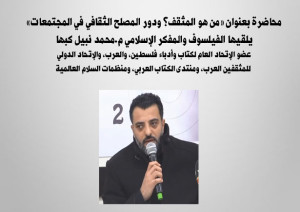
?Who is the intellectual? And what is the role of the cultural reformer in societies
April 13 - 15, 2026
محاضرة يلقيها الفيلسوف والمفكر الإسلامي م.محم...
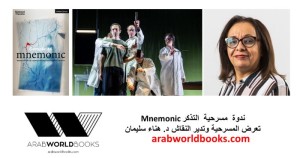
Mnemonic the Play, A Presentation and Discussion
January 24, 2026
This presentation and discussion of Mnemonic the P...
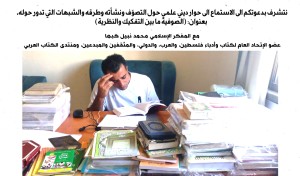
Sufism between deconstruction and theory
September 11, 2025
A religious and scientific dialogue on Sufism, i...